
balanced scorecard management system
The balanced scorecard is a performance management system which touches all parts of the business. The measurement focus of the balanced scorecard forms the basis of a strategic management system which:
- clarifies and translates vision and strategy
- communicates and links strategic objectives and measures
- plans, sets targets, and aligns strategic initiatives
- enhances strategic feedback and learning
The balanced scorecard translates the high level mission and strategic plan into a series of practical measures which indicate whether or not the organisation is achieving what it intended.
designing your balanced scorecard
We can help you design a balanced scorecard which is tailored to the specific needs of your business. These scorecards will cascade down from organisational to departmental and even team level.
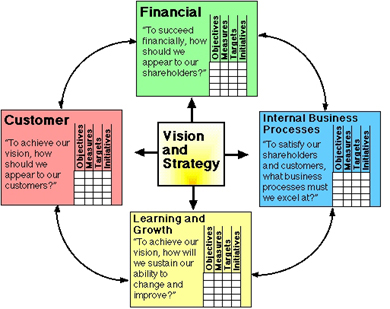
Adapted from Robert S. Kaplan and David P. Norton, “Using the Balanced Scorecard as a Strategic Management System,” Harvard Business Review (January-February 1996): 76.
four perspectives of the balanced scorecard
Financial Perspective
The financial perspective retains the need for traditional financial data. However it recognises that the programmes, initiatives and change management processes drive the need for measures that reflect the intangible assets of an organisation.
Customer Perspective
The customer perspective considers the world through your customers’ eyes. In developing metrics, customers should be benchmarked against value propositions which reflect product and service attributes, image or brand and relationships.
Internal Perspective
The internal business perspective focuses the organisation on the processes most critical for achieving customer and financial objectives. The focus is on mission-oriented processes as opposed to support processes – as well as the targets and initiatives which ensure best use of resources.
Learning and Growth
Learning and growth relates to individuals and information, but perhaps most importantly to the organisation as a whole. Culture, leadership and teamwork, and the alignment and readiness of an organisation to meet strategic objectives, leads to successful outcomes.
These perspectives give an organisation balance between internal and external measures, and balance between outcomes – results from past efforts – and measures that drive future performance.
leading and lagging measures
Your balanced scorecard needs to contain a mix of leading and lagging indicators:
- Leading indicators suggest progress towards achieving strategy and generally move ahead of lagging indicators. Measures of organisational culture, employee skills, supplier relationships and communication effectiveness are examples of leading indicators.
- Lagging indicators are very important but they “view the world through the rear view mirror”. Sales and profit are examples of lagging indicators.
Strategy Maps are often used in conjunction with the balanced scorecard to help identify the key internal processes and communicate strategy.