
designing your strategy map
We can help you to prepare your strategy map more effectively and efficiently. Save time and money by utilising our experience and expertise.
We bring objectivity, structure and insight to the process. We take an action learning approach – explaining the principles of strategy and strategy maps – then applying them. This is customised training with a tangible outcome for senior staff.
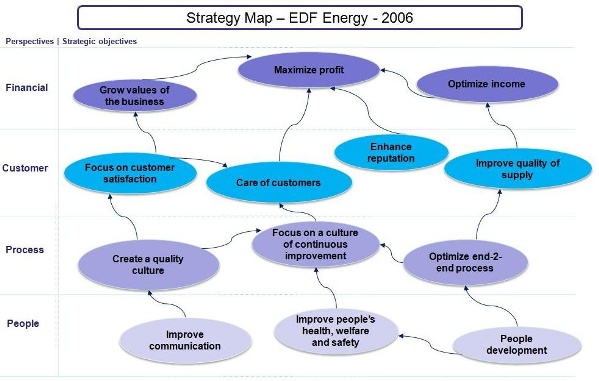
Source: Neely et al, 2006
strategy map features and benefits
Strategy maps describe how value is created:
- describing strategy visually, translating it into quantifiable operational measures
- identifying the internal processes which drive success
- aligning investments in people, technology and organisational capital with internal processes
- exposing gaps in strategies, enabling early corrective action to be taken
- clarifying strategies and communicating them to employees at organisational and departmental level
strategy map principles
- Strategy maps help balance competing forces such as long and short-term objectives
- They are based on differentiated customer value propositions
- Strategy maps recognise that value is created (or negated) through internal processes
- Strategy is driven and implemented through internal processes which need to be supported by learning and growth
- Strategy comprises a series of complementary themes which must be aligned if value is to be created and sustained
- Strategy maps provide strategic feedback and learning since they monitor both progress and success of strategies
strategy map origins
The strategy map (Kaplan and Norton) evolved from the four-perspective model of the balanced scorecard, adding a visual dimension which improves clarity and focus.